
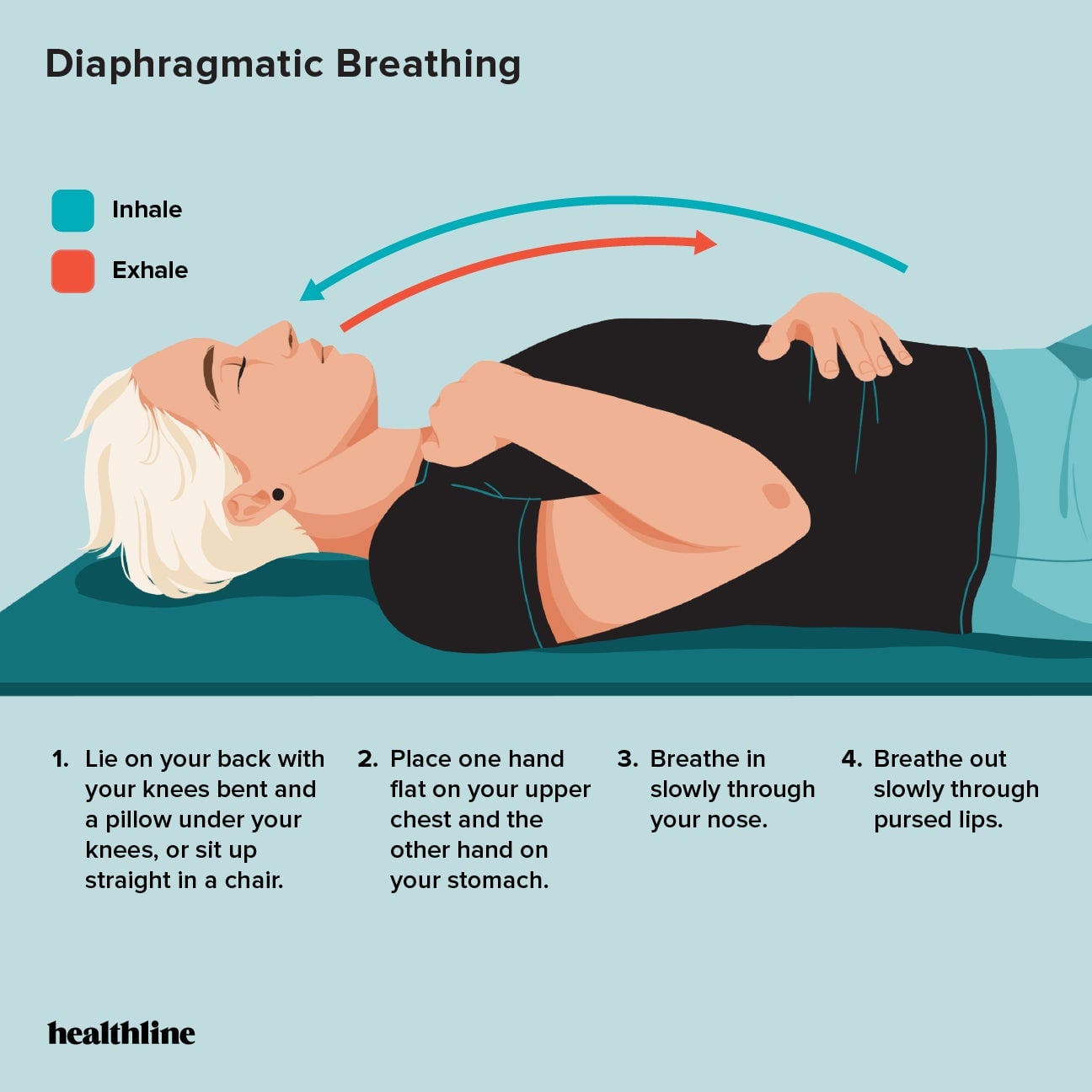
Slow, controlled breathing can be a useful relaxation technique before bedtime, particularly when stress or mental tension makes it difficult to unwind. Techniques such as diaphragmatic breathing, slow breathing, and other relaxation exercises may help some people feel calmer before sleep.
However, breathing exercises should not be presented as guaranteed treatments for insomnia. Evidence for relaxation techniques alone is limited, while cognitive behavioral therapy for insomnia, known as CBT-I, has stronger support for chronic insomnia.
Popular patterns such as 4-7-8 breathing or box breathing may feel relaxing, but there is not strong evidence that one specific breathing ratio is universally superior for falling asleep. If counting breaths makes you more anxious or uncomfortable, simply slowing your breathing and focusing gently on the exhale may be more appropriate.
A consistent sleep schedule, a dark and quiet bedroom, limiting stimulating activities before bed, and avoiding excessive caffeine late in the day can also support healthier sleep habits.
If sleep difficulties persist or significantly affect daytime functioning, consider discussing them with a healthcare professional.