
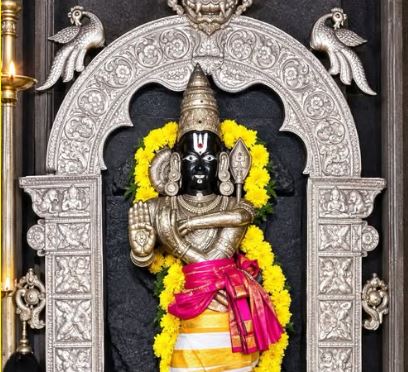
A 1,500-Year Heritage of Bhagwan Venu Gopala Swamy.
Sri Sammohana Venugopala Swamy Temple, Jonamchunduru, Guntur
A remarkable piece of Andhra Pradesh’s spiritual and cultural heritage, the Sri Sammohana Venugopala Swamy Temple in Jonamchunduru village, around 13 km from Guntur city, is believed by local traditions to have a history of nearly 1,500 years.
The deity is approximately six feet tall, carved from black stone, and is believed to represent the Omkara. Bhagwan Venugopala is depicted holding the flute, with one hand playing it while the other fingers are shown in Abhaya Mudra, symbolising protection and blessings.
The temple idol is surrounded by intricate carvings, including gopikas accompanied by cows near the feet. A Chakra appears on the right and a Shankha on the left. The upper portions feature representations associated with the Dashavatara and Saptarishis.
The idol is also locally believed to have been carved from Salagrama stone, adding to its religious significance.
According to local historical traditions, the temple has connections with the Kondaveeti Reddy kings. Lakumadevi, described as a court dancer associated with the Reddy kings, is traditionally believed to have been a devoted worshipper of Lord Venugopala and to have performed mandapam dance at the temple on every full-moon day.
The temple’s annual Brahmotsavams are celebrated during Phalguna, attracting devotees from surrounding villages for special pujas and religious programmes.
Beyond its spiritual importance, Sri Sammohana Venugopala Swamy Temple represents a unique combination of ancient traditions, devotional heritage, architecture and sculpture.
Local devotees have urged that historical records and evidence associated with the temple be properly collected and preserved so that this ancient heritage can be protected for future generations.
May Sri Sammohana Venugopala Swamy bless everyone with peace, prosperity and protection.