
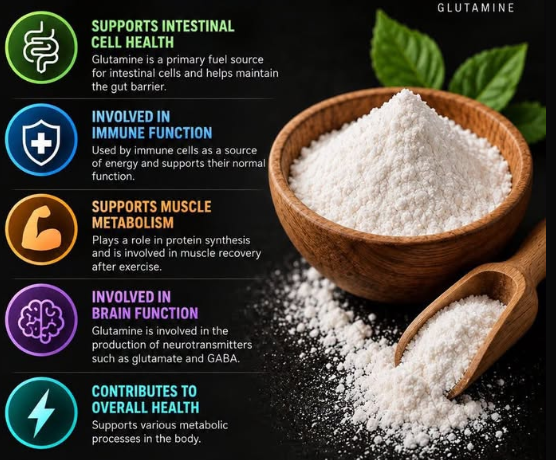
Glutamine is an amino acid that plays important roles in protein metabolism and several processes throughout the body.
It is used by intestinal cells and immune cells and contributes to nitrogen metabolism and other cellular functions.
The body can normally produce glutamine, and it is also obtained from protein-containing foods such as meat, eggs, dairy, beans, and other protein-rich foods.
For most healthy people eating a varied diet, dietary protein provides glutamine as part of normal nutrition.
Glutamine is sometimes marketed as a supplement for gut health, immunity, exercise recovery, or muscle growth.
However, supplement benefits are not guaranteed, and evidence varies depending on the specific population and purpose.
Although glutamine is involved in intestinal and immune function, saying that taking extra glutamine automatically “heals the gut” or significantly boosts immunity would be an overstatement.
For people with certain illnesses, injuries, or medical conditions, glutamine metabolism can change, and supplementation should be discussed with a healthcare professional rather than self-prescribed.
A balanced diet with adequate total protein, fruits, vegetables, whole grains, and healthy fats remains the foundation of good nutrition.
Think of glutamine as an important biological molecule, not a magic supplement.