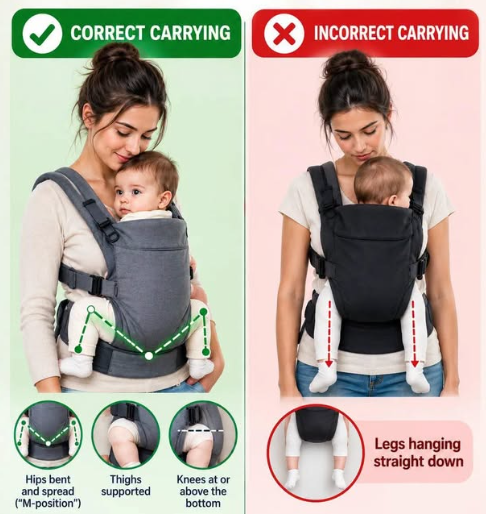
A well-fitted baby carrier should support both the baby’s airway and body position. For young babies, the face should remain visible, the nose and mouth unobstructed, and the baby should be held close enough for the caregiver to regularly check their breathing.
For hip positioning, the carrier should support the thighs so the hips can remain comfortably bent and spread, often described as an “M-position,” with the knees around the level of or higher than the bottom.
The exact position can vary with the baby’s age, development and carrier design, so the image should not be treated as a universal correct-vs-wrong rule.
Always follow the carrier manufacturer’s age, weight and positioning instructions. Stop and reposition the baby immediately if their face becomes covered, their chin is pressed tightly to their chest, or breathing appears difficult.