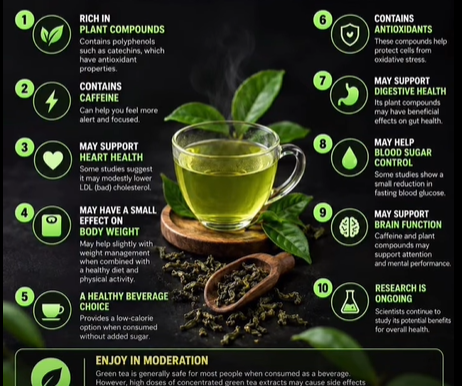
Green tea is a low-calorie beverage that contains naturally occurring plant compounds called catechins, along with caffeine.
Catechins are polyphenols that have antioxidant properties and are one reason green tea has been widely studied for potential health effects.
The caffeine in green tea can temporarily increase alertness and attention, although sensitivity varies considerably between people.
Green tea can also be a useful alternative to sugary drinks when consumed without large amounts of added sugar.
Research has investigated possible relationships between green tea consumption and cardiovascular health, body weight, blood glucose, and other outcomes, but the evidence does not justify treating green tea as a cure or guaranteed disease-prevention tool.
Some studies suggest modest effects on certain cardiovascular risk factors, while results vary depending on the amount consumed, preparation, population studied, and overall lifestyle.
Drinking green tea as part of a balanced diet is generally different from taking concentrated green tea extract supplements.
High-dose green tea extracts can cause side effects and, in some cases, have been associated with liver injury or interactions with medicines.
People who are pregnant, sensitive to caffeine, taking medications, or considering concentrated extracts should discuss appropriate use with a healthcare professional.
For most people, the practical takeaway is simple: unsweetened green tea can be a healthy beverage choice, but it should complement—not replace—balanced nutrition, physical activity, sleep, and medical care.