Healthy aging is influenced by multiple factors, and there is no single formula that determines how quickly someone ages. Genetics matter, but lifestyle and environmental factors also contribute.
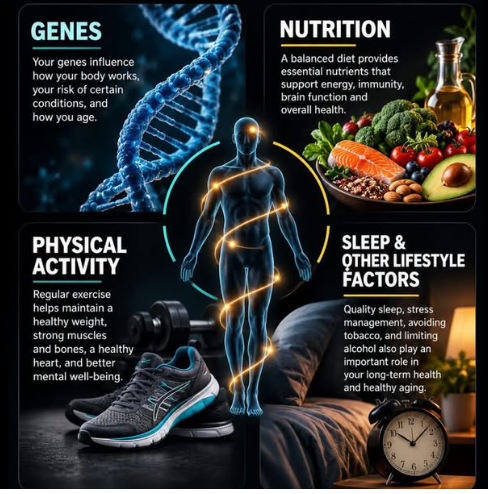
Nutrition is important because a balanced eating pattern supplies energy, protein, vitamins, minerals, fiber, and other nutrients needed for normal body functions. A varied diet can support heart health, muscle maintenance, bone health, and overall well-being.
Regular physical activity is another major factor. Aerobic activity supports cardiovascular fitness, while strength training helps maintain muscle and supports bone health. Combining different types of movement can be useful throughout adulthood.
Sleep also matters. Poor or insufficient sleep can affect mood, attention, metabolism, and other aspects of health. Consistent sleep habits and addressing persistent sleep problems can support healthy aging.
Stress management is important as well. Ongoing stress can affect well-being, so healthy coping strategies, relaxation, physical activity, and social connection can be valuable.
Avoiding tobacco, limiting alcohol, maintaining appropriate preventive care, and managing existing health conditions are also relevant to long-term health.
Genes can influence disease risk and how the body responds to certain factors, but genetic influence does not mean health outcomes are completely predetermined. Lifestyle choices can still matter substantially.
Healthy aging is therefore better understood as a combination of genetics, daily habits, environment, medical care, and social factors rather than one magic solution.