Ancient Engineering Marvel:
The Hidden Drainage System of Darasuram’s Airavateshwara Temple
Did you know that a 12th-century UNESCO World Heritage temple in Tamil Nadu features a sophisticated drainage system that modern engineers still marvel at?
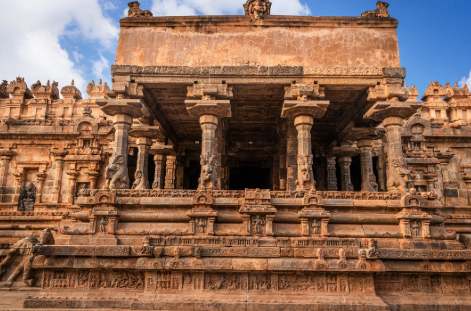
While the Airavateshwara Temple in Darasuram (built by the Chola Emperor Rajaraja II around 1100–1150 CE) is world-famous for its breathtaking architecture, intricate stone carvings, and musical steps, its hydraulic engineering is an unsung masterpiece of ancient India.
The Historic Connection & The Abhishekam
In ancient Chola temples, daily rituals (particularly Abhishekam or sacred bathing of the presiding deity) involved pouring hundreds of liters of milk, honey, ghee, sandalwood paste, and water over the main lingam.
In a massive temple complex, managing this immense volume of sacred liquid—without creating stagnation, unhygienic conditions, or structural damage to the sanctum’s foundation—was a critical architectural challenge. The Chola master builders solved this with brilliant, invisible hydraulic engineering.
How the Drainage System Works:
The Underground Network: The temple features a sophisticated network of underground conduits, stone-lined channels, and outlets designed to seamlessly carry wastewater away from the inner sanctum.
Gravity-Fed Flow: Without the use of modern pumps or mechanical power, the entire system relies on precise slope calculation and gravity, ensuring swift and efficient water drainage.
Protection of Foundation: The channels were engineered to divert liquids far away from the core temple structure, protecting the ancient granite and sandstone foundation from moisture erosion and dampness over centuries.
Eco-Friendly & Sustainable: True to ancient Indian architectural ethics, the runoff was safely directed toward temple gardens or dedicated water bodies outside the main shrine, nourishing the local ecosystem.
Why It Matters Today
The Cholas weren’t just exceptional artists and empire builders; they were master hydrologists. The drainage system at Airavateshwara proves that ancient Indian structural engineering prioritized longevity, environmental harmony, and smart resource management centuries before modern urban planning.
Next time you visit this architectural gem, take a moment to look beyond the towering gopurams and marvel at the unseen engineering beneath your feet!