

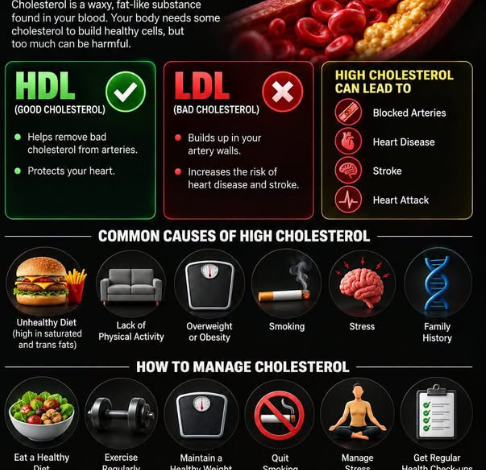
Cholesterol is a waxy substance your body needs for important functions, including making hormones and building cell membranes. Because cholesterol travels through the blood in lipoproteins, understanding LDL and HDL can help explain cardiovascular risk.
LDL cholesterol is commonly described as “bad” cholesterol because higher levels are associated with greater risk of plaque buildup in arteries and cardiovascular disease. HDL helps transport cholesterol toward the liver for processing, but a higher HDL number does not automatically cancel out other cardiovascular risk factors.
Cholesterol levels are influenced by several factors, including diet, physical activity, body weight, genetics, certain medical conditions, and medications. Family history can matter significantly, which is why some people may have high cholesterol even when they follow a healthy lifestyle.
Lifestyle measures can include eating more vegetables, fruits, whole grains, legumes, nuts, and seeds; choosing unsaturated fats more often; limiting trans fats and excessive saturated fat; staying physically active; avoiding tobacco; and maintaining a healthy weight when appropriate.
Regular blood tests can help identify abnormal cholesterol levels, and some people need medication based on their overall cardiovascular risk rather than cholesterol alone. Do not start or stop cholesterol medication without medical advice.
A heart-healthy lifestyle is a long-term approach, not a quick fix. If you know your cholesterol results, discuss the numbers and your individual risk factors with a qualified healthcare professional.