

Red, darker, lighter, yellow, blue, purple, or mottled skin can have very different explanations. Some changes are temporary and harmless, while others deserve medical attention.
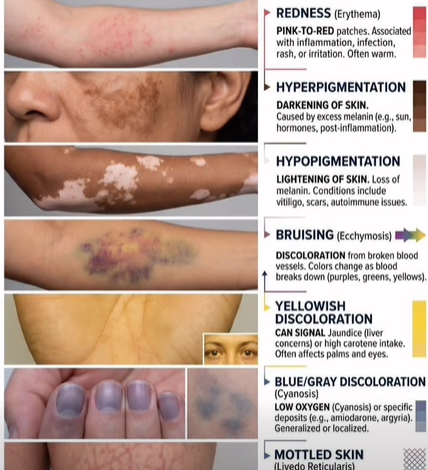
🔴 REDNESS
Red or pink skin can occur with irritation, inflammation, infection, heat, or a rash. What matters is what caused it and whether other symptoms are present.
🤎 DARKER PATCHES
Hyperpigmentation happens when areas of skin produce or retain more melanin. Sun exposure, hormones, inflammation, and healing skin injuries can all contribute.
⚪ LIGHTER PATCHES
Hypopigmentation occurs when an area has less pigment than the surrounding skin. It can happen after inflammation or injury and with certain skin conditions.
🟣 BRUISING
Bruises develop when small blood vessels break beneath the skin. The color can change from purple or blue to green and yellow as the bruise heals.
🟡 YELLOWISH SKIN
Yellow discoloration can have different causes. When the skin and whites of the eyes become yellow, jaundice is one possibility and should be evaluated.
🔵 BLUE OR GRAY SKIN
A blue or gray appearance can sometimes indicate reduced oxygen in the blood, particularly when it affects the lips, face, or nail beds. Sudden unexplained bluish discoloration can require urgent medical attention.
🕸️ MOTTLED SKIN
A lace-like or net-shaped pattern can appear temporarily with cold exposure, but persistent or unexplained mottling can have other causes.
⚠️ HERE’S WHAT MATTERS:
Don’t try to diagnose a condition from skin color alone.
The location, timing, duration, associated symptoms, medications, recent illness, injuries, and whether the change is spreading can all change what the finding means.
🚨 GET MEDICAL HELP PROMPTLY IF A COLOR CHANGE IS:
- Sudden and unexplained
- Accompanied by trouble breathing, chest pain, fainting, or severe weakness
- Associated with yellowing of the skin or eyes
- Accompanied by significant swelling or pain
- Persistent or rapidly worsening
- Appearing without an obvious explanation
Your skin can sometimes be an early visible clue — but it’s the pattern plus the other symptoms that matters.